Protecting West Jordan’s Water: E. coli Awareness & Prevention
What is E. coli?
Escherichia coli (E. coli) is a type of bacteria found in the intestines of people and animals. While most types are harmless, some strains can cause serious illness, especially in:
- Children under 5
- Adults over 65
- People with weakened immune systems
- International travelers
How Does E. coli Get Into Our Water?
In the Salt Lake Valley, rainwater and snowmelt flow directly into rivers and streams without treatment. This means contaminants like pet or livestock waste can carry harmful bacteria—including E. coli—into our waterways.
Pet waste is one of the top sources of water pollution in our area.
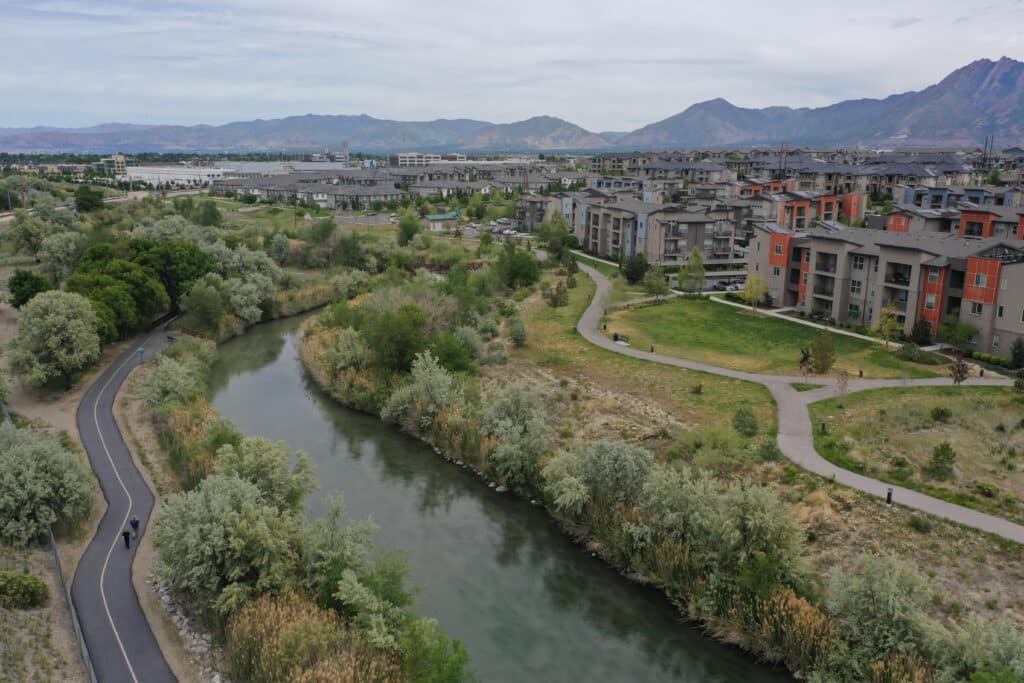
Clean Water Starts With Us
Questions? Contact us!
CONTACT INFO HERE
Learn more:
Protecting Our Water Starts With You
Clean Up After Pets
A single gram of pet waste can contain 23 million bacteria—including E. coli. Always bag and properly dispose of waste at dog parks and public spaces.
Keep Livestock Areas Clean
Don’t allow livestock to defecate near creeks, ponds, or irrigation channels. Create buffer zones and clean holding areas to prevent runoff.
Don’t Drink Untreated Water
When camping or hiking, boil water or use proper filtration before drinking, brushing teeth, or cooking.
Practice Good Hygiene
Wash hands after handling animals, working outside, or touching potentially contaminated surfaces.
Did You Know?
- Water that looks clean—like a mountain stream—can still be unsafe to drink.
- E. coli in water can lead to serious stomach illness.
- Decaying waste lowers oxygen in water, harming fish and wildlife.
